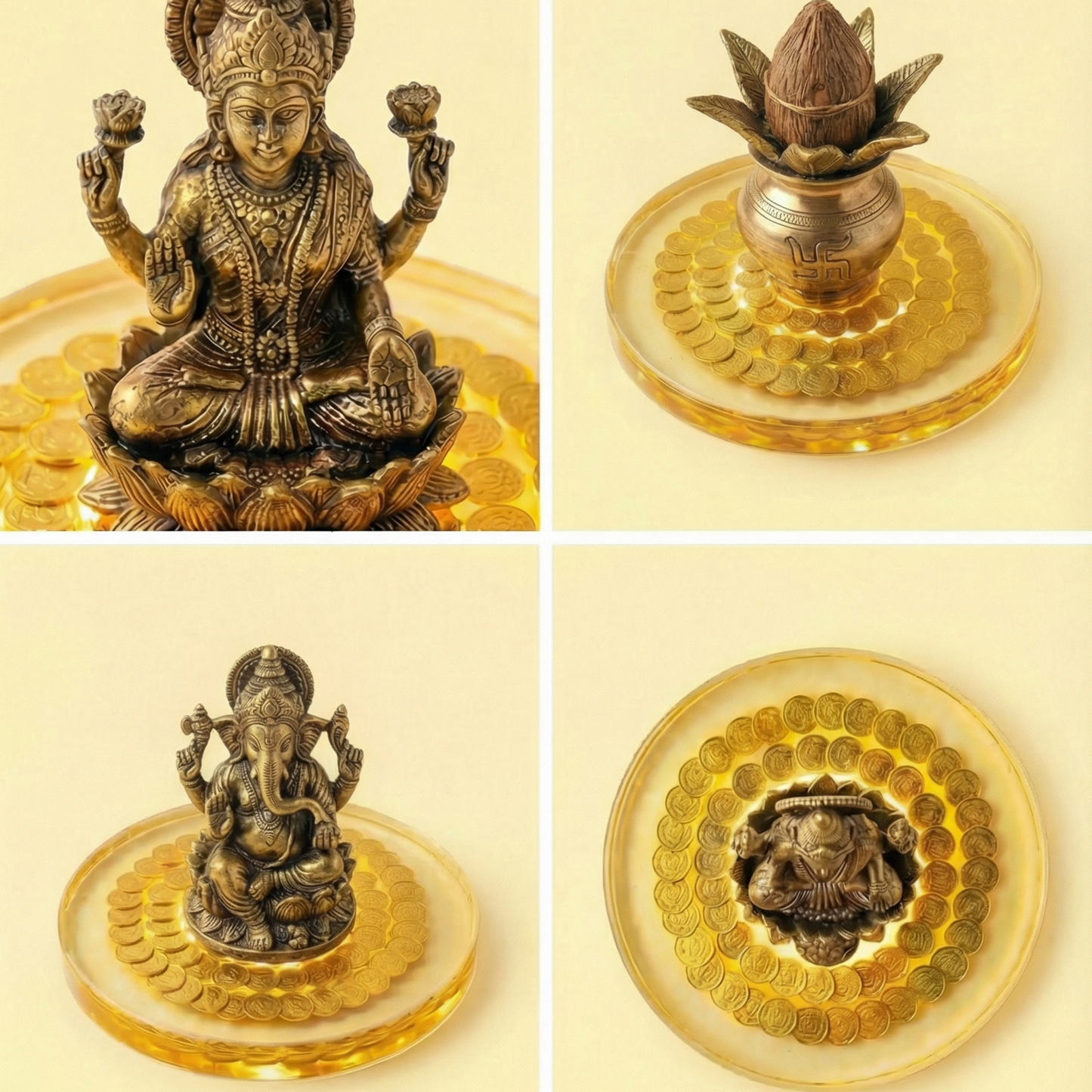
The Best Kalash Stand for Varalakshmi Vratam & Navratri Poojas
During major Hindu festivals like Varalakshmi Vratam and Navratri (Ghatasthapana), the Kalash is the sacred center of all devotion. It is not merely a decorative vessel; it is the physical invocation (Aavahana) of Goddess Lakshmi or Goddess Durga into your home.
Whether you are dressing the Kalash with a traditional silk saree, mounting a heavy silver Amman face, or keeping a 9-day Navratri Ghat filled with water and sacred sprouts, the base holding your Kalash must be three things: sacred, stable, and completely waterproof.
Unfortunately, many devotees struggle with traditional wooden bajots that warp from water spills, get permanently ruined by turmeric (Haldi) and kumkum, or wobble under the weight of heavy silver deities and flower garlands.
Here is your complete guide to selecting the ultimate Kalash stand for festival poojas and why the patented Krystalline Shila Lakshmi Peeta has become the premier choice for modern homes.
Why Festival Kalash Sthapana Demands a Heavy-Duty Base

Festival setups are significantly more complex and top-heavy than daily morning prayers. Consider what goes into a grand festival Kalash:
1. Varalakshmi Vratam Amman Setup
For Varalakshmi Vratam, the copper or brass Kalash is filled with rice or water, crowned with mango leaves and a coconut, and draped in a miniature saree. Often, heavy brass or pure silver Amman Mukhavadalu (goddess faces), gold jewelry, and heavy fresh flower garlands are mounted on top. A weak or narrow stand can easily tip over, causing disastrous spills during the pooja.
2. Navratri Ghatasthapana (9-Day Continuous Moisture)
During Navratri, the Ghat remains seated in the North-East (Ishan Kone) corner of your mandir for nine continuous days and nights. Water is offered daily, and sacred seeds (Navadhanya) are watered around the base. Standard wooden or MDF stands absorb this constant humidity, leading to swelling, mold growth, and foul odors right in front of the deity.
4 Reasons Traditional Kalash Stands Fail During Festivals
Before investing in festival decor, it is important to understand why conventional bases fall short:
-
Water Absorption & Mold: Wooden chowkis soak up water spills from daily Abhishekam. Within 48 hours of Navratri, black mold and fungi begin growing in the damp wood, creating an inauspicious environment (Vastu Dosha).
-
Permanent Turmeric & Kumkum Stains: Turmeric applied to the coconut or Kalash rim inevitably drips down. On porous wood, marble, or plastic, turmeric leaves deep yellow stains that are impossible to wash out.
-
Instability & Wobbling: Hand-carved wooden legs or thin plastic stands often have uneven bottoms. A top-heavy Kalash dressed in silver or heavy garlands can wobble or tip over if accidentally bumped.
-
Tarnishing of Silver Plates: Using a silver plate as a base seems traditional, but the reaction between water, turmeric, and silver causes extreme black oxidation, requiring harsh chemical polishing after the festival.
Why the Lakshmi Peeta is the Ultimate Festival Kalash Stand

Engineered specifically to solve these festival challenges, the Krystalline Shila Lakshmi Peeta offers a flawless balance of Vedic sacredness and modern structural engineering.
Key Benefits for Varalakshmi & Navratri Poojas:
-
100% Waterproof & Stainproof Surface: Made from high-density, non-porous Krystalline Shila, it never absorbs liquid. Water, milk, panchamrutam, turmeric paste, and kumkum sit on the surface without soaking in. Simply wipe with a damp cloth after the festival for a brand-new shine.
-
Embedded with 108 Pure Kubera Coins: The base features 108 genuine Kubera coins cast in sacred geometry. When Goddess Lakshmi or Durga is invoked on top of this peetam, the 108 coins act as a powerful wealth yantra, locking in Sthira Lakshmi (enduring prosperity) for your family.
-
Rock-Solid Stability for Heavy Amman Decor: Designed as a heavy, monolithic slab with a flat bottom, it provides a 100% wobble-free foundation. It effortlessly supports 25kg+ loads, keeping top-heavy Amman faces, coconuts, and brass pots completely secure.
-
Crystal Mirror-Glass Aesthetic: The crystal-clear finish reflects the light of your festival diyas and elevates the visual beauty of your decorated Amman, making your pooja altar look radiant in photos and videos.
Comparison: Festival Kalash Stands Evaluated
|
Feature |
Wooden Bajot / Chowki |
MDF / Plastic Stand |
Pure Silver Plate |
Lakshmi Peeta (Krystalline Shila) |
|
Water & Moisture Resistance |
Poor (Warps, swells, & rots) |
Worst (Disintegrates when wet) |
High (Does not rot) |
100% Completely Waterproof |
|
Turmeric / Kumkum Stain Resistance |
None (Soaks deep into wood) |
None (Permanent stains) |
Medium (Leaves dark tarnish marks) |
100% Stainproof (Wipes clean) |
|
Structural Stability (Heavy Decor) |
Medium (Legs can wobble) |
Poor (Flexes under weight) |
Low (Bends easily if thin) |
Maximum (Engineered for 25kg+) |
|
Vastu & Energy Alignment |
Low (Rotting wood attracts negative energy) |
Zero (Synthetic materials) |
High (Pure metal) |
Maximum (108 Kubera Coins Vastu Yantra) |
|
Post-Festival Maintenance |
High (Drying, sanding, or discarding) |
Discard after water damage |
High (Requires silver polish) |
Zero (5-second damp cloth wipe) |
Step-by-Step: Setting Up Your Festival Kalash on a Lakshmi Peeta
Follow this simple guide to ensure an auspicious, picture-perfect setup for Varalakshmi Vratam or Navratri:
-
Position the Peeta in the North-East: Place your Lakshmi Peeta in the North-East (Ishan Kone) or East zone of your home mandir or festival altar.
-
Lay the Grain Bed (Akshata): Spread a small, neat layer of raw rice grains or Navadhanya (for Navratri) on top of the clear peetam.
-
Seat the Kalash: Place your copper, brass, or silver Kalash squarely in the center of the peetam. Fill it with water, Ganga Jal, a coin, cardamom, and betel nut.
-
Decorate: Arrange 5 or 7 fresh mango leaves around the rim, seat the coconut, and mount your Varalakshmi saree/face or Navratri adornments.
-
Enjoy a Stress-Free Pooja: Perform daily Arghya, water offerings, and Abhishekam without worrying about ruinous water leaks or turmeric stains on your furniture.
Frequently Asked Questions (FAQs)
Q1. Can the Lakshmi Peeta support a fully dressed Varalakshmi Amman Kalash with heavy silver decor?
Yes. The Lakshmi Peeta is a solid, monolithic slab engineered to hold over 25kg without bending or flexing. It easily supports heavy copper/brass Kalashes, full water volume, silver faces, coconut, and extensive flower arrangements with total stability.
Q2. How do I clean dried turmeric, kumkum, and oil off the peetam after Navratri or Varalakshmi pooja?
Unlike wooden stands that absorb stains permanently, the Krystalline Shila surface is completely non-porous. Simply spray mild soap water or warm water and wipe with a microfiber cloth. Even dried turmeric washes off instantly with zero yellow residue.
Q3. Can I sprout Navadhanya directly around the base during Navratri Ghatasthapana?
Yes. Because the peetam is 100% waterproof and impervious to organic growth, you can keep moist soil, rice, or sprouts near and on the base for all nine days of Navratri without any risk of wood rot or surface erosion.
Q4. Is the 108 Kubera coin peetam considered auspicious for Goddess Lakshmi festivals?
Extremely auspicious. Number 108 represents cosmic completeness in Vedic tradition, while Lord Kubera is the celestial treasurer. Invoking Goddess Varalakshmi or Goddess Durga on a foundation embedded with 108 Kubera coins creates an ideal energetic channel for attracting long-term wealth, peace, and harmony to the household.