Vastu Rules for Kalash Sthapana: Where and How to Place Your Kalash
In Hindu traditions, the Kalash (Purna Kumbha) is not merely a copper or brass vessel filled with water; it is the physical invocation of the entire universe, holding the divine cosmic energy of the deities. Whether during major festivals like Navratri, Varalakshmi Vratam, and Diwali, or milestone ceremonies like a Griha Pravesh, performing Kalash Sthapana correctly is the single most important step to inviting divine blessings into your home.
However, many homeowners unknowingly commit critical Vastu errors during Sthapana—such as placing the Kalash directly on the bare floor or using wooden bases that absorb water and rot.
In Vastu Shastra, placing the sacred Kalash on an improper base or in the wrong corner disrupts the flow of positive vibrations. Here is your definitive guide on the Vastu rules for Kalash Sthapana, where to place it, and how to create a permanent foundation for health, harmony, and Sthira Lakshmi (enduring wealth).

1. The Correct Vastu Directions for Kalash Placement
The location of your Kalash determines how effectively cosmic energy circulates through your home.
-
The North-East Zone (Ishan Kone): This is the ultimate, most sacred zone for Kalash Sthapana. Governed by Lord Shiva and the water element (Jala Tattva), placing a water-filled Kalash in the North-East balances the home's energy field and attracts financial clarity.
-
The East Zone: If the North-East corner is unavailable, placing the Kalash in the East direction is highly auspicious. Governed by Lord Surya, it promotes family health, reputation, and steady progress.
-
Directions to Strictly Avoid: Never place a sacred Kalash in the South, South-West, or West zones of your home. These directions carry conflicting elemental energies that can cause financial instability and family friction.
2. Why You Must Never Place a Kalash Directly on the Floor
One of the strict injunctions in Vedic rituals is that a sacred Kalash must never touch the bare floor.
When a consecrated vessel containing sacred water, rice (Akshata), mango leaves, and a coconut is placed directly on the ground, the subtle spiritual frequencies (Prana) generated during prayers drain downward into the earth. To retain these vibrations, the Kalash must always rest on a raised, pure Asanam (foundation).
Furthermore, because Kalash rituals involve water spillage, placing it directly on tiles, marble, or wooden flooring can cause permanent water rings, stains, and moisture damage.
3. The Problem with Traditional Wooden & Metal Kalash Bases
For generations, families have used wooden chowkis (bajots) or silver plates as bases for Kalash Sthapana. While traditional, these materials pose severe practical and Vastu challenges:
-
Wooden Chowkis Rot and Absorb Stains: Water spilled from the Kalash, mixed with turmeric (Haldi), kumkum, and milk, seeps deep into porous wood. Over time, this leads to black mold, wood rot, and foul odors. In Vastu, keeping decaying wood in a sacred space attracts negative energy (Vastu Dosha).
-
Silver Bases Oxidation & High Maintenance: Pure silver plates tarnish and turn black when exposed to air and moisture. Cleaning intricate silver bases requires harsh chemical polishes, adding tedious chores to your festival preparations.
-
Low Load Capacity: Festival Kalashes decorated with brass pots, water, coconuts, and heavy garlands get extremely heavy, often causing thin wooden or plastic stands to wobble or crack.
4. The Modern Solution: Krystalline Shila Lakshmi Peeta
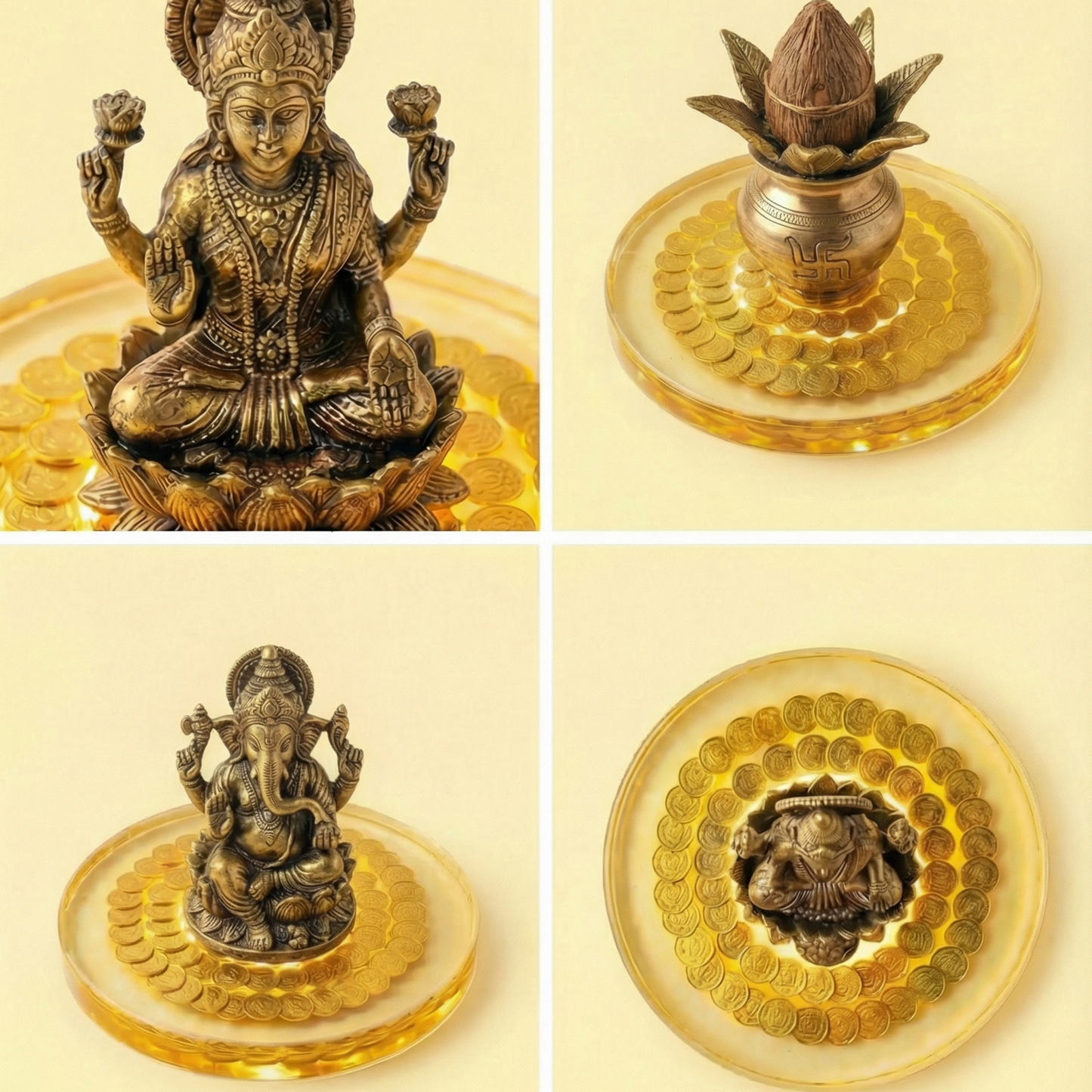
To solve the conflict between ancient Vastu requirements and modern daily maintenance, the Krystalline Shila Lakshmi Peeta was created.
Specifically engineered as a monolithic, heavy-duty pooja pedestal, it serves as the ultimate Kalash stand:
-
100% Waterproof & Non-Porous: Spilled water, oil, or turmeric never penetrates the surface. It wipes clean in 5 seconds with a damp microfiber cloth, maintaining a crystal-clear mirror finish for a lifetime.
-
Embedded with 108 Pure Kubera Coins: Strategically cast in sacred geometry, the 108 coins embedded inside the pedestal transform your Kalash base into an active yantra that stabilizes household wealth (Sthira Lakshmi).
-
Heavy-Duty Load Capacity: Designed to hold 25kg+ effortlessly, providing a rock-solid, wobble-free foundation for heavy brass and copper Kalashes.
Material Comparison for Kalash Sthapana Bases
|
Feature / Criteria |
Bare Floor |
Traditional Wooden Chowki |
Pure Silver Base |
Lakshmi Peeta (Krystalline Shila) |
|
Vastu Compliance |
Zero (Energy leaks into ground) |
Medium (Rots over time) |
High (Requires constant cleaning) |
Maximum (108 Kubera Coins & pure foundation) |
|
Waterproof Performance |
N/A (Ruins floor tiles/marble) |
Poor (Absorbs water, warps & rots) |
High (Does not rot, but tarnishes black) |
100% Waterproof & Stainproof |
|
Turmeric & Kumkum Stains |
Permanent stains on marble |
Soaks into wood permanently |
Leaves stubborn tarnish spots |
Wipes clean instantly with zero residue |
|
Maintenance Level |
High floor scrubbing required |
High (Needs replacing when rotten) |
High (Requires chemical silver polish) |
Zero Maintenance |
|
Durability & Lifespan |
N/A |
1 - 2 Years max |
Lifetime (but warps easily if thin) |
Lifetime Monolithic Durability |
5 Rules for a Perfect Kalash Sthapana Setup

Follow this quick 5-step checklist every time you set up a Kalash in your home mandir:
-
1. Clean and Purify the North-East Corner: Ensure the Ishan Kone of your mandir is completely dust-free and uncluttered before starting.
-
2. Elevate the Base: Place your Lakshmi Peeta down first to act as the primary, waterproof, yantra-infused foundation.
-
3. Prepare the Grain Bed: Spread a small layer of raw, unbroken rice grains (Akshata) or wheat on top of the peetam before placing the Kalash vessel.
-
4. Fill with Sacred Elements: Fill the copper or brass Kalash with clean water, adding a coin, cardamom, betel nut (Supari), and a drop of Ganga Jal.
-
5. Crown with Leaves and Coconut: Place 5 or 7 fresh mango leaves around the rim and seat a water-filled coconut facing upward (or toward the devotee) to complete the cosmic antenna.
4 Common Mistakes to Avoid During Kalash Sthapana
Even with the best intentions, small errors during the setup of your Kalash can disrupt the flow of divine energy in your home mandir. To ensure your rituals attract maximum Sthira Lakshmi (enduring wealth) and peace, strictly avoid these four common mistakes:
1. Using a Defective or Leaking Vessel
Never use a Kalash that has dents, deep scratches, or minor leaks. A damaged vessel signifies financial leakage and instability in the household. Always inspect your copper or brass Kalash before filling it, and ensure it sits perfectly flat on your waterproof Lakshmi Peeta.
2. Facing the Coconut in the Wrong Direction
The placement of the coconut (Nariyal) on top of the Kalash is crucial. The 'face' or 'eyes' of the coconut (the three distinct spots at the base) must always point upward toward the ceiling or outward toward the person performing the pooja. Never let the eyes of the coconut face downward into the water pot, as this is considered highly inauspicious.
3. Letting the Mango Leaves Dry Out and Crumble
Fresh mango leaves (Pallava) represent life, growth, and the expulsion of negative energy. Allowing these leaves to completely dry out, turn brown, and crumble into the water while the Kalash is still active creates stagnant energy (Tamas). If the pooja spans several days (like during Navratri), it is acceptable to gently replace wilted leaves with fresh ones to keep the energy vibrant.
4. Ignoring the Water Ring Damage on Mandir Surfaces
Many families realize too late that condensation and minor spills from a copper Kalash create permanent, black ring stains on wooden surfaces and marble. Ignoring this not only ruins expensive mandir cabinetry but also creates Vastu Dosha by allowing mold to grow in a sacred space. Always place your Kalash on a non-porous, 100% waterproof foundation like the Krystalline Shila Lakshmi Peeta to completely eliminate this risk.
Frequently Asked Questions (FAQs)
Q1. Which metal Kalash is best according to Vastu Shastra?
Copper (Tamra) is universally considered the most auspicious metal for a Kalash because it holds high conductivity for positive cosmic rays. Brass and pure silver are also excellent choices. Avoid using iron, steel, or plastic vessels for Kalash Sthapana as they do not retain spiritual energy.
Q2. What should I do with the Kalash water after the pooja or festival is over?
Never pour sacred Kalash water down a kitchen sink or toilet drain. Sprinkle a few drops throughout your home to purify the living space, and pour the remaining water at the roots of a sacred plant like Tulsi or a Banyan tree.
Q3. Can I place a heavy brass idol on top of the Kalash stand alongside the Kalash?
Yes, provided your stand is wide enough and has a high load capacity. The Lakshmi Peeta is engineered as a heavy-duty monolithic slab, making it capable of supporting both a heavy Kalash and solid brass idols (like Lakshmi or Ganesha) simultaneously without any risk of bending or cracking.
Q4. Why are 108 Kubera coins embedded inside the Lakshmi Peeta significant for Kalash Sthapana?
In Vedic numerology, 108 represents cosmic completeness and alignment with the universe. Lord Kubera is the guardian of heavenly wealth. Combining the water element of the Kalash with the 108-coin foundation creates a complete energetic circuit in your North-East corner, transforming temporary festival blessings into permanent household prosperity (Sthira Lakshmi).