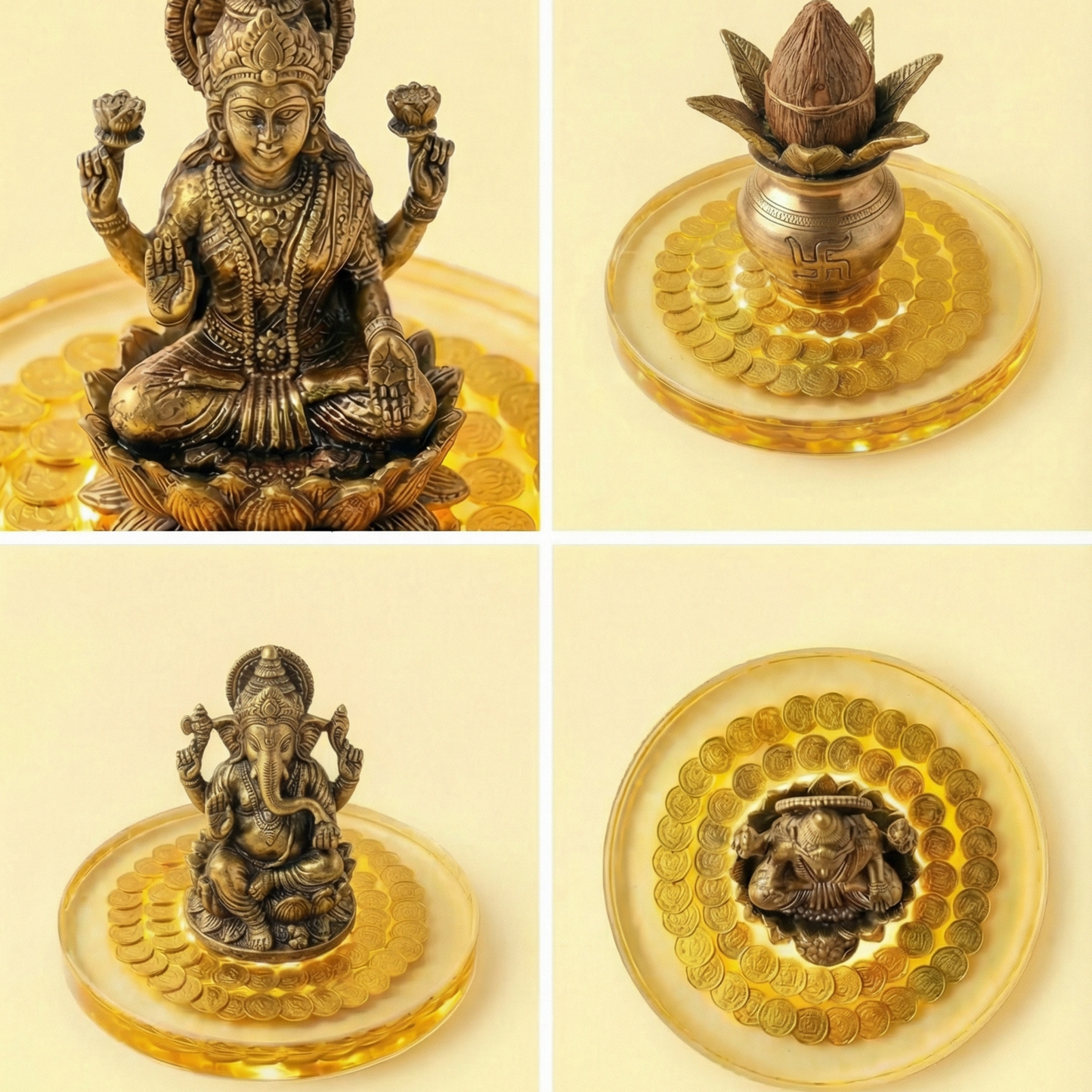
Wooden Bajot vs. Krystalline Shila Bajot: Why Wood Rots During Daily Abhishekam
For generations, the traditional wooden bajot (or chowki) has been the foundation of the Indian home mandir. Hand-carved from teak, mango, or rosewood, these pedestals carry a deep sense of heritage.
But if you perform daily pooja—especially Abhishekam using water, milk, panchamrit, and haldi—you already know the frustrating reality. Within just a few months, that beautiful wooden bajot begins to stain, warp, and eventually rot.
Today, many households are moving away from porous wood and upgrading to 100% waterproof alternatives like the Krystalline Shila Bajot (Lakshmi Peeta). Let’s look at the science of why wood fails in a pooja setting and why modern materials are better for your home’s Vastu.
The Problem: Wood + Abhishekam = Inevitable Decay
 Wood is a naturally porous, organic material. Like a sponge, it is designed by nature to absorb moisture. When you use a wooden bajot for daily deities (like a Shiva Lingam, Shaligram, or brass idols), it faces a harsh daily environment.
1. The Moisture Trap
During Abhishekam, liquids seep into the microscopic grain of the wood. Even if the bajot has a layer of varnish or polyurethane polish, the sharp edges of heavy brass idols inevitably scratch that protective coating. Once the seal is broken, water penetrates deep into the core.
2. Mold and Fungus (The Vastu Red Flag)
Trapped moisture inside the wood cannot dry properly, especially in the enclosed space of a mandir. This leads to black mold and fungal growth underneath the bajot.
The Vastu Impact: According to Vastu Shastra, placing deities on decaying, rotting, or moldy surfaces in the North-East corner creates massive Vastu Dosha. It generates stagnant, negative energy that blocks the flow of Sthira Lakshmi (stable wealth and peace).
3. Warping and Instability
As wood repeatedly absorbs liquids and dries out, it expands and contracts. Over time, the legs of the bajot become uneven, causing your heavy idols to wobble dangerously.
The Modern Alternative: Krystalline Shila Bajot
 To solve the inherent flaws of wood without losing the premium, sacred aesthetic of the mandir, Katha Sala engineered the Lakshmi Peeta—a solid, legless bajot cast from proprietary Krystalline Shila.
Here is why it dramatically outperforms traditional wooden chowkis for daily pooja:
1. 100% Non-Porous and Waterproof
Krystalline Shila is a dense, glass-like resin composite. It has zero pores. Whether you pour water, milk, ghee, or turmeric over it during Abhishekam, the liquid simply beads up on the surface. It is physically impossible for this bajot to absorb moisture, meaning it will never rot, warp, or grow mold.
2. Stain-Proof Maintenance
Turmeric (haldi) and kumkum will permanently stain the varnish on a wooden bajot. On a Krystalline bajot, a quick wipe with a damp cloth instantly restores the surface to a flawless, transparent shine.
3. Scratch-Resistant Solid Monolith
Unlike wooden bajots with four fragile legs that can snap under the weight of a heavy panchaloha idol, the Krystalline bajot is a solid, flat block. It easily supports idols weighing 5kg to 25kg+ while distributing the weight evenly, protecting the marble countertops of your mandir from scratches.
Quick Bajot Comparison

|
Feature |
Wooden Bajot |
Krystalline Shila Bajot |
|
Water Resistance |
Low (Absorbs moisture eventually) |
100% Waterproof |
|
Maintenance |
Difficult to clean turmeric stains |
Wipes clean instantly |
|
Vastu Safety |
Can rot/mold, creating Dosha |
Remains eternally pure |
|
Structural Strength |
Legs can warp or become uneven |
Solid block, extreme stability |
|
Aesthetics |
Opaque, blocks light |
Transparent, refracts diya light |
Conclusion: Protect Your Altar's Energy
If your pooja routine is strictly dry—meaning you only offer flowers and light incense—a wooden bajot is perfectly fine.
However, if you bathe your deities, offer liquids, and conduct regular Abhishekam, placing your Gods on a rotting, damp piece of wood actively works against your spiritual and financial intentions. By upgrading to a Krystalline Shila Bajot, you ensure the foundation of your mandir remains as pure, stable, and flawless as your devotion.