How to Choose the Best Pooja Chowki for Your Home Mandir?
Setting up a home mandir requires careful thought, precision, and adherence to traditional Vastu principles. While immense attention is given to the idols, the lighting, and the direction of the temple, the foundation itself—the Pooja Chowki (or Peetam)—is frequently treated as an afterthought.
According to Vastu Shastra, placing sacred deities directly on the floor or a bare shelf creates a severe energy leak, draining the spiritual vibrations into the earth. A dedicated Asana (seat) is required to elevate the deities, show reverence, and anchor positive energy within your home.
However, the practical reality of daily Indian worship is rigorous. Between milk and water Abhishekam, dripping oil from brass diyas, and wet turmeric and kumkum, the environment inside a pooja room is highly demanding. If you choose the wrong material for your chowki, it will degrade, stain, and become an eyesore within months.
Here is the complete, in-depth guide to evaluating materials, understanding maintenance requirements, and choosing the perfect Pooja Chowki for your home.
The Ultimate Pooja Chowki Material Comparison

To make an informed decision, you must look beyond aesthetics and evaluate how different materials react to daily worship rituals.
|
Material Type |
Water Resistance |
Stain Resistance (Haldi/Kumkum) |
Maintenance Required |
Load-Bearing Capacity |
Longevity & Durability |
|
Carved Wood (Teak, Mango, MDF) |
Very Low. Absorbs water, swells, and rots over time. |
Poor. Turmeric permanently stains the porous surface. |
High. Requires dry wiping only; prone to termite/fungal attacks. |
Medium. Hollow bases can warp under heavy brass idols. |
1 to 3 years before degrading. |
|
Brass / Copper / Silver-Plated |
High. Impervious to liquid penetration. |
Medium. Does not stain, but acidic liquids cause severe black oxidation. |
Very High. Requires weekly chemical polishing (e.g., Pitambari). |
High. Can support heavy weights without bending. |
Decades, but requires constant labor to look good. |
|
White Marble / Stone |
Medium. Natural stone is porous and absorbs oils over time. |
Low. Yellows and permanently absorbs sticky oil and haldi over time. |
Medium. Difficult to move for cleaning due to extreme weight. |
Very High. Excellent for heavy deities. |
Decades, but aesthetics degrade as stains accumulate. |
|
Krystalline Shila (Resin) |
100% Waterproof. Liquid pools on the surface for easy wiping. |
100% Stainproof. Glass-like finish repels turmeric and kumkum. |
Zero. Simply wipe clean with a damp microfiber cloth. |
Extreme. Solid monolithic block safely holds 25kg+ idols. |
Lifetime. Will not rot, rust, tarnish, or warp. |
Deep-Dive: The Hidden Flaws of Traditional Chowkis

Many homeowners default to traditional materials without realizing the long-term maintenance burden they are bringing into their homes.
1. The Problem with Wooden Chowkis
Wooden chowkis feature beautiful traditional carvings, but wood is inherently porous. If you perform regular Jal (water) or Dugdha (milk) Abhishekam, the runoff seeps into the wood grain. Over a few months, this trapped moisture causes the wood to swell, crack, and harbor mold. The intricate carvings, while beautiful, act as traps for dust, sticky oil, and kumkum, making it impossible to clean thoroughly.
2. The Exhaustion of Metal Chowkis
Brass and silver-plated chowkis provide a premium, heavy-duty feel. The fatal flaw of metal is oxidation. The air inside a pooja room is often filled with camphor smoke and incense, accelerating the tarnishing process. When brass interacts with acidic substances used in poojas (like lemon or curd), it turns black. Maintaining a metal chowki requires hours of exhausting scrubbing with harsh chemical powders every single week.
3. The Inconvenience of Marble
Marble chowkis are excellent for weight-bearing, but they are impractically heavy for daily cleaning. You cannot easily lift a marble chowki to clean the shelf beneath it. Furthermore, authentic marble is surprisingly porous. If a brass diya leaks oil onto a marble base, it will seep below the surface and leave a permanent yellowish-brown shadow that cannot be scrubbed out.
5 Essential Buying Criteria for the Perfect Pooja Chowki
If you want a permanent, high-quality foundation for your deities, run your potential purchase through this checklist:
-
100% Waterproofing: Can you pour a glass of water directly onto the chowki without it seeping into joints or causing structural damage? If not, it is not suitable for daily Abhishekam.
-
Zero-Stain Surface: Will a drop of wet turmeric permanently alter the color? You need a non-porous, glass-like finish that allows you to wipe away haldi and kumkum instantly.
-
Monolithic Load-Bearing Capacity: If you own solid brass, bronze, or stone idols, your chowki must have a solid core. Hollow wooden stands or cheap plastic alternatives will bow, warp, or crack under 10kg to 25kg of weight.
-
Ease of Cleaning: Does the chowki have deep, sharp crevices that trap dirt? The best modern chowkis feature smooth, accessible surfaces that wipe clean in seconds, eliminating the need for chemical polishes.
-
Vastu Compliance: A good chowki should provide a flat, stable, and elevated base, ensuring your deities are seated securely and respectfully above the floor level.
The Modern Standard: Why the Lakshmi Peeta is the Ultimate Upgrade

For homeowners tired of replacing rotting wood or polishing blackened brass, the Lakshmi Peeta represents the pinnacle of pooja room engineering.
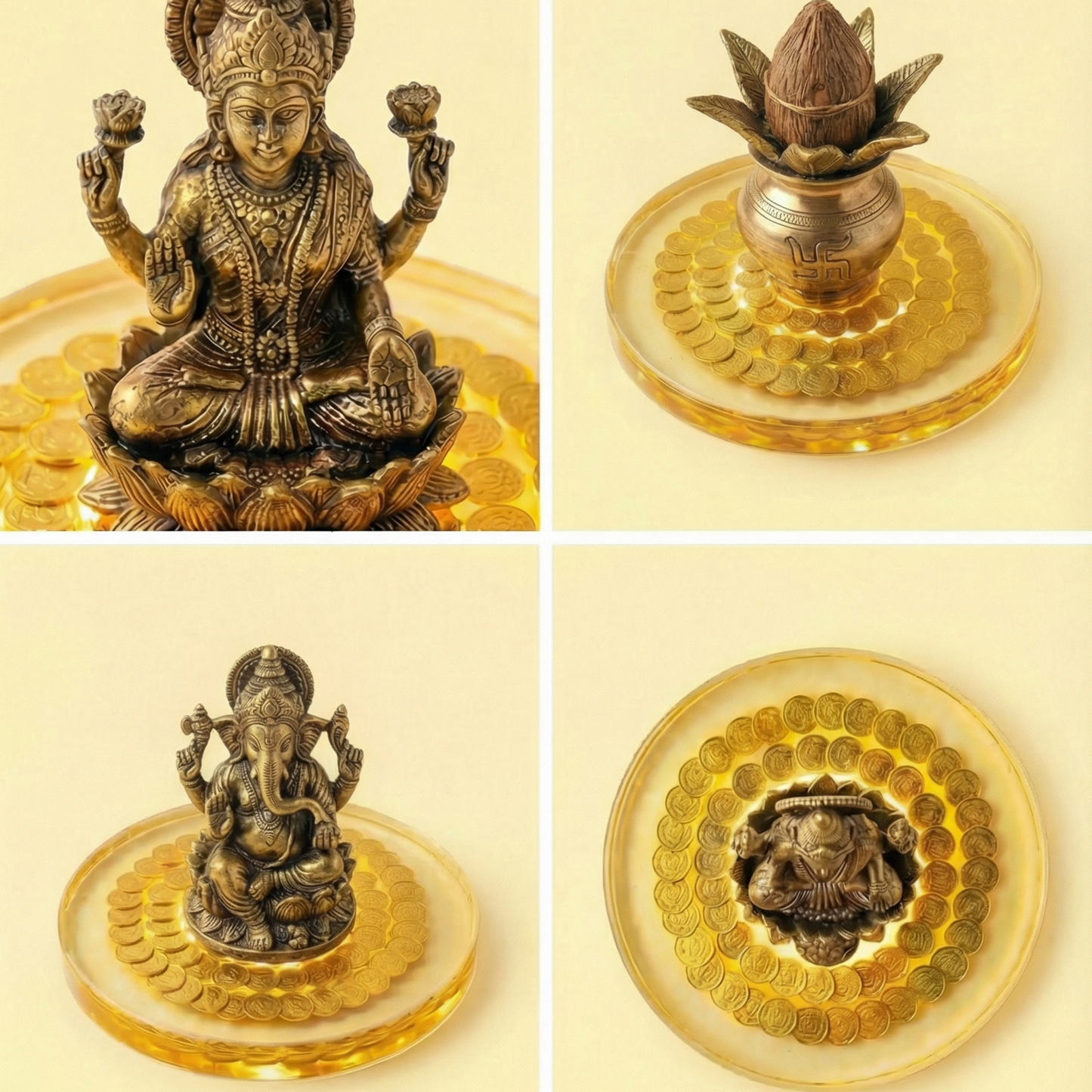
Manufactured using Krystalline Shila—a specialized, ultra-durable, crystal-clear epoxy resin system—the Lakshmi Peeta is a high-performance upgrade designed specifically to solve the problems of traditional chowkis.
-
Engineered for Daily Abhishekam: The solid resin block is 100% waterproof and stainproof. Sticky oil, wet sandalwood paste, and turmeric simply glide off the surface with a damp cloth. It requires absolutely zero chemical polishing.
-
Unbreakable Foundation: Cast as a solid, monolithic block, the Lakshmi Peeta provides extreme structural integrity. It will easily support your heaviest brass idols without a millimeter of bending or wobbling.
-
The 108 Coin Yantra Integration: The Lakshmi Peeta goes beyond being a simple stand. Permanently suspended inside the crystal-clear base are 108 pure Kubera coins. In professional Vastu applications, this precise mathematical configuration acts as an active wealth anchor, establishing a dedicated magnetic field for Sthira Lakshmi (enduring, stable prosperity).
By upgrading to a Krystalline Shila Lakshmi Peeta, you are eliminating pooja room maintenance entirely while providing your deities with a pristine, Vastu-compliant, and structurally flawless foundation.
Make the right choice for your mandir today—choose a foundation built for a lifetime of devotion.
Frequently Asked Questions (FAQs)
Q1. Which chowki material is best if I perform daily Abhishekam?
If your daily rituals involve pouring water, milk, or panchamrutam over your deities, you must avoid wood and MDF completely, as they will swell and rot. The best material for daily Abhishekam is Krystalline Shila (used in the Lakshmi Peeta) because it is 100% non-porous and waterproof, allowing liquids to pool on the surface without causing structural damage.
Q2. How do I remove stubborn turmeric (haldi) and kumkum stains from a pooja chowki?
On traditional wooden or marble chowkis, turmeric leaves permanent yellow stains that are nearly impossible to remove because the material absorbs the pigment. If you use a Krystalline Shila Lakshmi Peeta, turmeric and sticky oils cannot penetrate the glass-like surface. You can wipe away even dried haldi instantly using just a damp microfiber cloth, leaving zero residue.
Q3. Can the Lakshmi Peeta support heavy brass or bronze idols?
Yes. Unlike traditional hollow wooden stands or thin plastic bases that bow or warp under heavy loads, the Lakshmi Peeta is cast as a solid, monolithic block. It safely and securely supports heavy brass, bronze, and stone idols weighing upwards of 25kg without wobbling.
Q4. Why is placing the Lakshmi Peeta better for Vastu than a standard wooden stand?
While a standard wooden stand simply elevates the idol, decaying wood from water damage can attract negative energy (Vastu Dosha). The Lakshmi Peeta solves this by never degrading. Furthermore, it acts as an active wealth anchor, featuring 108 pure Kubera coins permanently embedded in sacred geometry within the clear base to attract Sthira Lakshmi (enduring prosperity).
Q5. Do I need to use chemical polishes like Pitambari on a resin chowki?
No. Brass, copper, and silver-plated chowkis require frequent, exhausting scrubbing with harsh chemical powders to remove black oxidation and tarnish. The Krystalline Shila material never oxidizes or tarnishes. It maintains its brilliant, crystal-clear shine permanently with just a simple wipe down with plain water or mild soap.