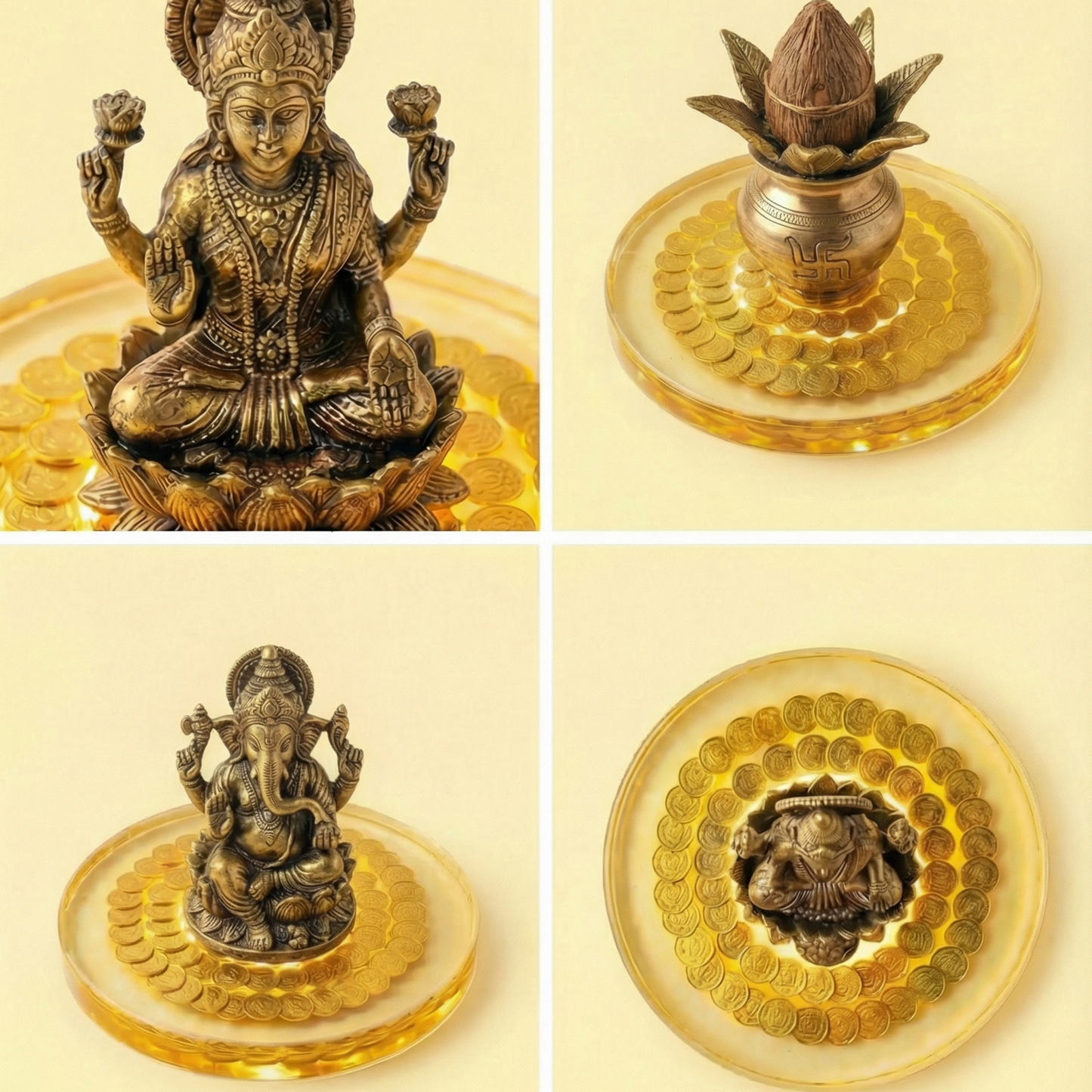
The Best Heavy Duty Pooja Stand for Brass Idols
Brass, bronze, and Panchaloha idols are the traditional centerpieces of a true Indian home mandir. These magnificent deities carry immense spiritual presence—and immense physical weight.
When you place a heavy brass idol in your sacred space, the foundation it sits upon must be absolutely secure. Unfortunately, most homeowners make the mistake of placing these substantial idols on fragile, lightweight furniture. If you are searching for a pooja stand for heavy idols, choosing the wrong design can lead to wobbling, structural collapse, and severe Vastu violations.
Here is why traditional stands fail under pressure, and how to secure your deities on an unshakable, heavy-duty foundation.
The Danger of Flimsy Stands for Heavy Idols

According to Vastu Shastra, deities must be placed on a completely stable, immovable surface. A wobbling or tilted idol represents instability and can disrupt the peace and financial security of your household.
Standard pooja stands create massive risks when tasked with holding heavy brass idols:
-
The 4-Leg Weakness: Most wooden or metal stands feature four separate legs attached by screws, glue, or joints. Under continuous heavy weight, these joints loosen. Eventually, the stand begins to sway or wobble every time you touch the idol to apply kumkum or perform Abhishekam.
-
Bowing and Warping: Thin wooden boards or MDF planks will literally bow (bend in the middle) over time when supporting a 5kg to 10kg brass deity.
-
Surface Scratching: Brass idols have hard, unpolished undersides. When you shift the idol for cleaning, it leaves deep gouges and permanent scratches on standard wooden surfaces.
Weight Capacity Comparison for Pooja Stands
How Different Materials Handle Heavy Brass Deities
|
Stand Material |
Structural Design |
Weight Bearing Capacity |
Risk of Wobbling |
|
Traditional Wood |
4-Legged / Joints |
Medium (Prone to bowing) |
High (Joints loosen over time) |
|
Hollow Brass/Metal |
4-Legged / Soldered |
Low to Medium |
High (Solders can snap under pressure) |
|
Marble / Stone |
Solid Block |
High |
Low (But risks cracking under impact) |
|
Lakshmi Peeta (Krystalline Shila) |
Solid Monolithic Block |
Extreme (Heavy-Duty Core) |
Zero (Flat-bottom, legless design) |
The Ultimate Heavy Duty Solution: Lakshmi Peeta

To safely elevate heavy brass idols without risking instability, devotees are upgrading to the Lakshmi Peeta by Katha Sala.
Engineered specifically as a heavy duty pooja stand, this patented masterpiece is cast from our proprietary Krystalline Shila. It is not a hollow box or a flimsy table; it is a meticulously engineered, solid monolith designed for absolute stability.
1. Legless, Flat-Bottom Design
The greatest structural advantage of the Lakshmi Peeta is its legless architecture. Because it is a solid, flat block, 100% of its base makes contact with your mandir floor or shelf. This perfectly distributes the weight of heavy brass idols, ensuring the stand is completely immovable and unshakable.
2. High-Density Core
Krystalline Shila boasts an incredibly high structural density. Unlike wood that bows or hollow metal that dents, this solid-cast material can easily support massive brass deities and heavy water-filled Kalash setups without a millimeter of bending or strain.
3. Scratch and Dent Resistant
The glass-like surface of Krystalline Shila is exceptionally durable. When you need to rotate or slightly adjust your heavy brass idols during a daily pooja, you can do so without worrying about gouging or scratching the peeta's surface.
Elevating Aesthetics and Energy
Beyond its industrial-grade strength, the Lakshmi Peeta elevates the divine energy of your heavy idols. Embedded deep within the heavy-duty Krystalline core are 108 Kubera coins.
Because the stand is completely transparent, light from your diyas passes through the ultra-strong base. It catches the gold tones of the 108 coins and projects a majestic, shimmering halo upward onto your brass idols, creating a visual display of devotion and Sthira Lakshmi (stable wealth).
Secure Your Deities Today
Do not place your heavy, sacred brass idols on a fragile stand that sways with every touch. Give your deities the unshakable, immovable foundation they deserve.
Frequently Asked Questions (FAQs)
Q1. How thick should a pooja stand be to support a 15kg+ brass idol?
If you are using wood, the top plank must be a minimum of 1.5 to 2 inches thick, and the legs must be solid blocks rather than thin spindles. If you are using a monolithic resin block like the Lakshmi Peeta, a standard 1.5-inch thickness provides industrial-level strength that will easily hold over 50kg without flexing.
Q2. Will the rough base of a heavy brass idol scratch the Krystalline Peeta?
Brass is a dense metal, and the unpolished undersides of heavy idols can be abrasive. While Krystalline Shila is highly durable, sliding a 20kg rough brass base across any glossy surface (including glass or marble) can cause micro-scratches. We highly recommend placing small felt pads or a thin silicone mat strictly under the idol's base before placing it on the Peeta.
Q3. Why do acrylic pooja stands crack under heavy idols?
Most acrylic stands on the market are constructed by gluing thin sheets of plastic together to form a hollow box. The glue joints cannot handle sustained vertical pressure, and acrylic is a brittle material that shatters rather than bending.
Q4. Does a heavy-duty pedestal affect the Vastu of the mandir?
Yes, in a positive way. Vastu Shastra dictates that the foundation of your deities must be immovable, stable, and completely secure. A wobbling or sagging pooja stand creates severe Vastu Dosha (energy imbalance). A solid, immovable block like the Lakshmi Peeta anchors Sthira Lakshmi (enduring, stable wealth) in your North-East corner.