How to Clean Your Pooja Chowki Without Ruining It
A home mandir is a place of peace, devotion, and daily rituals. But let’s be honest: the cleanup after a beautiful pooja can be stressful. Daily offerings involve turmeric (haldi), kumkum, ghee, oil, milk, and water. While these elements are spiritually pure, they are notoriously harsh on standard mandir furniture.
If you are struggling with stubborn stains or watching your sacred foundation slowly degrade, you are not alone. Knowing how to clean your pooja chowki correctly depends entirely on its material—and using the wrong method can cause permanent damage.
Here is a guide on how to safely clean traditional chowkis, along with the secret to a completely zero-maintenance mandir setup.
The Challenge: Cleaning Traditional Materials

Traditional pooja bases require strict maintenance routines to prevent decay and discoloration.
-
Cleaning a Wooden Chowki: Wood is highly porous. If you spill oil or milk, it absorbs quickly. Never use a soaking wet cloth or harsh chemicals on wood. You must wipe spills immediately with a dry or very slightly damp microfiber cloth. If the wood stays wet, it will warp, rot, and invite termites. Sadly, turmeric and oil stains on unsealed wood are usually permanent.
-
Cleaning a Metal Chowki (Brass/Silver): Metal reacts to moisture and the acidic nature of lemon or yogurt used in Abhishekam. To clean brass, you typically need to scrub it rigorously with Pitambari powder, tamarind paste, or lemon and salt. If you do not dry it perfectly afterward, the water droplets will cause dark oxidation spots and rust.
-
Cleaning a Marble Chowki: While it looks premium, marble absorbs stains instantly. Haldi and kumkum will leave permanent yellow and red shadows. You must clean it with a soft cloth and mild, non-acidic soap immediately after your pooja.
Here is a quick reference guide on the cleaning risks and requirements for different pooja chowki materials:
|
Chowki Material |
Cleaning Method |
Risk of Permanent Damage |
Maintenance Level |
|
Wood |
Dry cloth only; wipe spills instantly. |
High (Rot, warping, oil stains) |
High |
|
Brass / Copper |
Acidic scrub (lemon/tamarind) + thorough drying. |
Medium (Blackening, rust spots) |
Very High |
|
Marble |
Mild soap + damp cloth instantly. |
High (Permanent turmeric stains) |
Medium |
|
Krystalline Shila (Lakshmi Peeta) |
Simple wipe with a damp cloth. |
Zero (100% stain-proof & waterproof) |
Zero |
The Pivot: The Zero-Maintenance Solution

If spending 15 minutes scrubbing brass or worrying about rotting wood ruins your spiritual peace, it is time to upgrade your mandir's foundation.
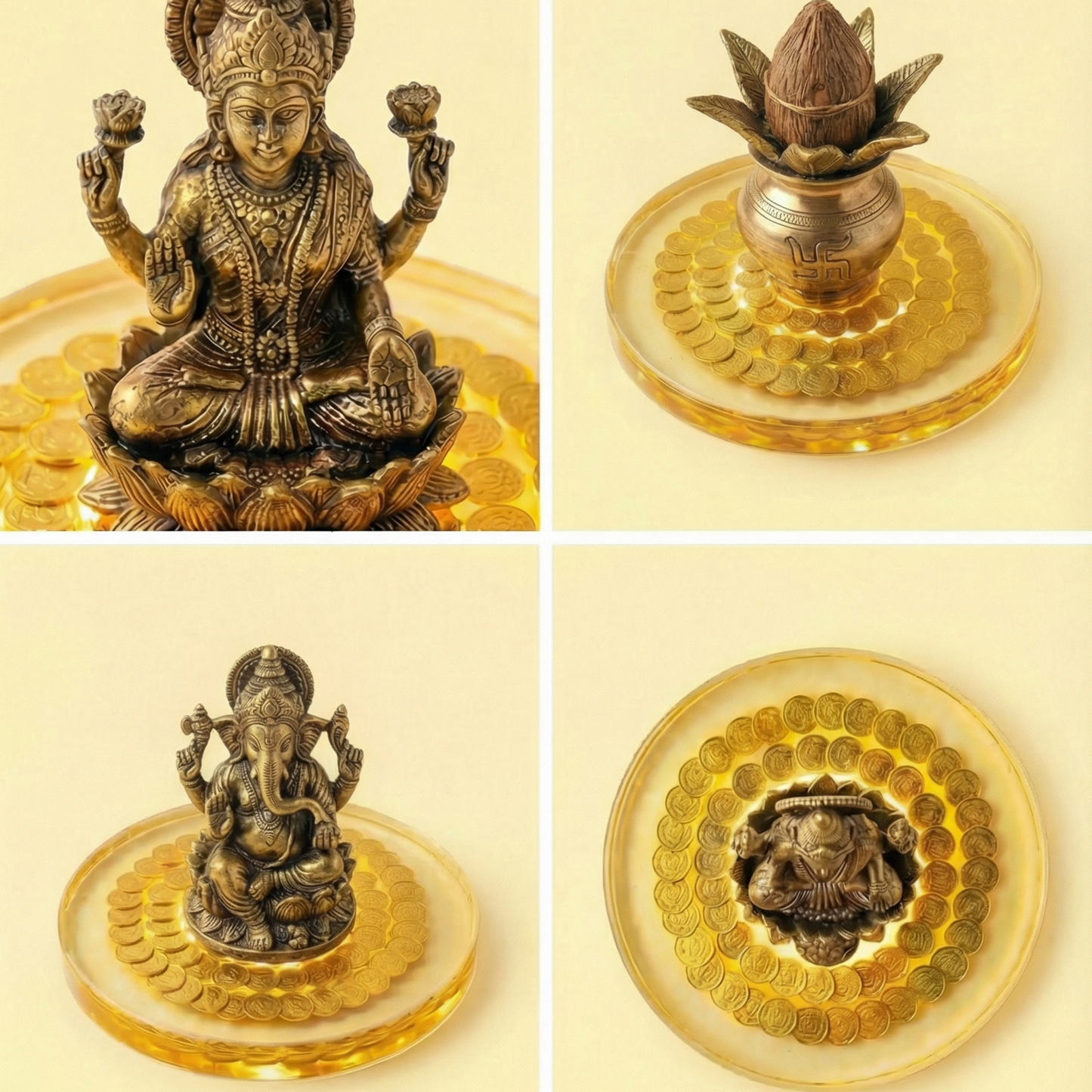
Devotees across the country are retiring their high-maintenance stands and upgrading to the by Lakshmi Peeta Katha Sala.
Engineered to be the ultimate waterproof pooja chowki, the Lakshmi Peeta completely eliminates the stress of mandir maintenance. It is crafted from a proprietary, clear-cast material known as Krystalline Shila. This advanced monolith has a flawless, glass-like finish that is 100% non-porous.
Why Krystalline Shila is Effortless to Clean
Unlike wood, metal, or stone, the Lakshmi Peeta literally repels liquids and stains. Here is what your cleanup routine looks like when you upgrade:
-
Fearless Offerings: Pour milk, water, and panchamrit directly over the peeta during Abhishekam. The liquid will glide right off the surface without absorbing.
-
No Scrubbing Required: Spilled ghee, sticky kumkum, and wet turmeric cannot penetrate the Krystalline Shila. You do not need tamarind paste, powders, or harsh soaps.
-
The 10-Second Wipe: To clean the Lakshmi Peeta, simply take a soft, damp cloth and wipe the surface. It immediately returns to its pristine, crystal-clear state.
Protecting Your 108 Kubera Coins
Because the peeta is perfectly transparent, maintaining its glass-like shine is crucial to its spiritual function.
Suspended inside the Krystalline Shila are 108 Kubera coins. By simply wiping away the daily oil and kumkum with a damp cloth, you ensure that the light from your diyas can always pass through the base, illuminating the coins and projecting a divine, shimmering halo of Sthira Lakshmi (stable wealth) into your room.
Stop stressing over stains and start enjoying your daily rituals. Upgrade to a foundation that is as pure and enduring as your devotion.
4 Rules for Safe Pooja Altar Maintenance
-
Never Let Spills Sit: Ghee, oil, and wet haldi become sticky and harder to remove if left overnight. Wipe down the surface immediately after major festivals like Diwali or Navratri.
-
Use Microfiber Cloths Only: Rough cotton rags, paper towels, or scouring pads can leave micro-scratches on polished surfaces. Always use a soft microfiber cloth for dusting and wiping.
-
Dry Thoroughly (If Using Wood): If your mandir features a traditional wooden chowki, ensure no moisture is left in the joints or carved crevices to prevent mold and damp odors.
-
Choose Zero-Maintenance Alternatives: Upgrading to a non-porous, waterproof pedestal like the Lakshmi Peeta eliminates cleaning anxiety entirely, allowing you to wash away oil and turmeric without fear of stains.
Frequently Asked Questions (FAQs)
Q1. Can I use regular kitchen surface cleaners on my pooja chowki?
No. Standard household multi-surface cleaners often contain strong synthetic fragrances, bleach, or ammonia that can strip polished finishes, leave chemical residues, or react poorly with sacred altars. Stick to plain water, mild dish soap, or specialized material-safe cleaners.
Q2. How do I get stubborn turmeric (haldi) stains off my pooja chowki?
On traditional wooden or marble altars, haldi stains often penetrate the pores and become permanent. On a non-porous surface like the Krystalline Shila Lakshmi Peeta, turmeric wipes away completely with a damp cloth and a drop of mild soap, leaving zero yellow residue behind.
Q3. Is it safe to wash a pooja chowki directly under running water?
Only if your chowki is made from 100% waterproof materials like solid Krystalline Shila or pure, solid metal. Never submerge or rinse wooden, MDF, or silver-plated altars under running water, as moisture will seep into the core and cause structural decay.
Q4. How often should I thoroughly clean and dust my home mandir?
Light dusting should be done daily during morning or evening prayers. A thorough deep-cleaning of the pooja chowki and surrounding altar space should be performed at least once a week—or immediately following major ritual offerings and festivals.