How to Choose the Right Size Pooja Bajot for Heavy Idols (5kg to 25kg+)
Placing a heavy brass, Panchaloha, or marble idol on an undersized or flimsy bajot is a recipe for disaster. A wobbly stand not only risks tipping precious deities, but thin wooden legs can buckle under 10kg+ loads and scratch expensive Italian marble counters.
Choosing the correct size and material for a heavy idol requires balancing weight capacity, base diameter, and structural surface area. Here is how to select the ideal pedestal for a secure home mandir.
Step 1: Measure the "Base Footprint" (The 2-Inch Rule)
 The most common sizing mistake is measuring the height or width of the idol's arms rather than its actual base foundation.
-
Measure the Base: Measure the widest part of the idol's pedestal base (length and breadth for square bases, or diameter for round lotus bases).
-
Apply the 2-Inch Rule: Always select a bajot that extends at least 1 to 2 inches beyond the idol's base on all sides. For example, if your brass Ganesha base is 6 inches wide, your bajot surface must be at least 8 to 10 inches wide.
Why this matters: A border margin creates a visual frame for the deity while keeping liquid offerings (Abhishekam water, milk, flowers) on the pedestal rather than spilling directly onto your mandir floor.
Step 2: Calculate Weight Load vs. Bajot Architecture
 Not all bajots are engineered to hold heavy metals like bronze, brass, or Panchaloha. The physical architecture of the pedestal dictates its maximum weight capacity:
4-Legged Wooden & Metal Bajots
-
Structure: Weight is concentrated entirely on 4 small corner joints or legs.
-
Risk: Over time, heavy idols (7kg+) exert point-pressure on these joints. When wet during pooja, wooden joints swell and loosen, causing the stand to rock.
Monolithic Solid Pedestals (Legless)
-
Structure: Weight is distributed across 100% of the flat bottom surface area.
-
Benefit: Solid blocks constructed from dense Krystalline Shila have no weak joints or leg points. They effortlessly support loads exceeding 50kg without flexing or cracking.
Idol Weight & Bajot Sizing Reference Chart
Use this quick reference guide to pair your deity's weight and base dimensions with the correct pedestal size:
|
Idol Weight Range |
Typical Base Width |
Recommended Bajot Diameter / Size |
Ideal Material & Structure |
|
Small (1kg – 3kg) |
2" – 4" |
6" Round or Square |
Hardwood, Brass, or Krystalline Shila |
|
Medium (4kg – 8kg) |
4" – 6" |
8" to 10" Pedestal |
Reinforced Wood or Solid Monolith |
|
Heavy (9kg – 15kg) |
6" – 8" |
10" to 12" Monolith |
Solid Krystalline Shila (Legless) |
|
Extra Heavy (16kg – 30kg+) |
8" – 12"+ |
12" to 15"+ Monolith |
High-Tensile Krystalline Block |
Step 3: Prevent Surface Scratches on Marble & Granite
Heavy metal idols often have sharp, unpolished bottom edges from the casting process. When placed directly on marble mandir tops or thin wooden bajots, shifting them even slightly creates permanent scratches.
To protect your altar:
-
Avoid Thin Metal Plates: Sheet-metal covered bajots dent under heavy brass heels.
-
Opt for Non-Scratch Smooth Bases: Choose a smooth, non-porous pedestal material like Krystalline Shila. Its solid, glass-smooth surface acts as a protective buffer between the rough metal idol and your temple counter.
-
Ensure Zero Wobble: Test the pedestal on a flat surface before placing the idol. A monolithic, legless base guarantees 100% flush contact with the counter, eliminating micro-wobbles during daily aarti.
Built for Heavy Deities: The Lakshmi Peeta Advantage
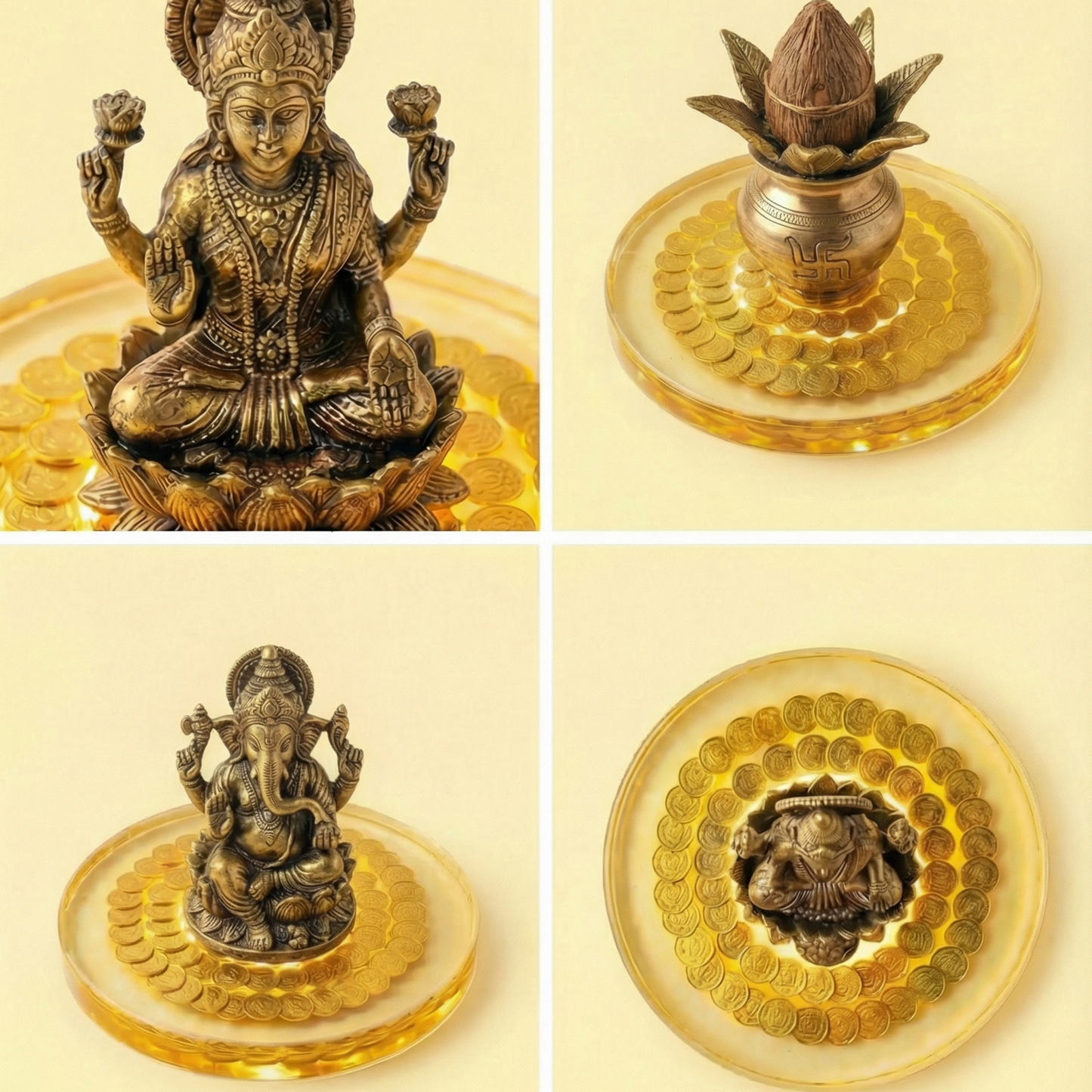
If you own heirloom brass or Panchaloha idols weighing over 5kg, the Lakshmi Peeta by Katha Sala provides an engineered solution built specifically for heavy load-bearing:
-
50kg+ Load Rating: Cast as a solid monolithic block from proprietary Krystalline Shila, it will never bow, snap, or warp under heavy idols.
-
Built-in 108 Kubera Yantra: Contains 108 pure Kubera coins permanently embedded inside the clear block, giving your heavy idol a sacred, glowing foundation.
-
100% Scratch & Water Protection: Completely non-porous material protects mandir marble from scratch marks and liquid damage during daily Abhishekam.
Frequently Asked Questions (FAQs)
1. How much wider should the bajot be compared to the idol's base? Always leave a minimum clearance of 2 to 3 inches on all sides of the idol. For example, if your idol's base is 10 x 10 inches, your bajot should be at least 14 x 14 inches. This prevents tipping, distributes the weight evenly, and leaves room for daily offerings like flowers or diyas.
2. Can resin pedestals support heavy idols over 15kg? Yes, high-quality, fully cured epoxy resin is incredibly strong and can easily support heavy weights if cast properly. However, for idols over 15kg, the resin structure must be thick (at least 1.5 to 2 inches) and ideally reinforced. Avoid hollow or thin acrylic stands for anything over 5kg.
3. Does the leg design of the bajot matter for heavy idols? Leg design is critical for weights above 10kg. Avoid thin, highly carved, or spindle legs, as they can bow or snap under sustained pressure. Opt for block legs, wide cylindrical legs, or a continuous base (like a solid block or a peeta with skirted edges) to spread the downward force safely.
4. How do I prevent a heavy bajot from scratching the pooja room floor? When you combine a 20kg idol with a 5kg heavy-duty bajot, the friction can easily scratch tiles or wood flooring. Attach heavy-duty felt pads, rubber grips, or silicone floor protectors to the bottom of the bajot legs before placing the idol on top.
5. Will a wooden bajot warp under a 25kg brass idol? Standard plywood or softwoods (like pine) will warp or bow over time under heavy, concentrated weight. If choosing wood for a 25kg+ idol, use solid, seasoned hardwoods like Teak, Rosewood, or Sheesham, and ensure the top plank is at least 2 inches thick.